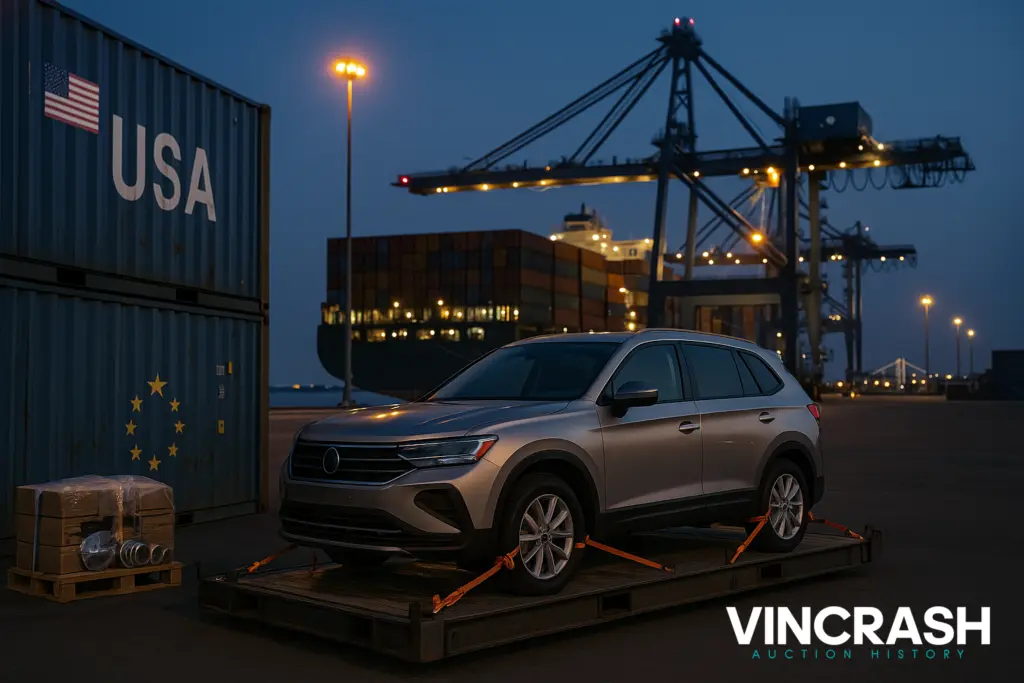
Cars from the States are now very popular and tempt with better equipment and often a lower price. To make imports viable, you need to approach the subject as a project: lay out a plan, check the VIN history and keep an eye on the paperwork. Here is the simplest path – no jargon and no ‘asterisks’ in small print.
To start, count the TCO: car purchase, US trailer, ocean freight with cargo insurance, port charges, customs, excise, VAT, translations, technical inspection, possible light modifications and registration. Leave a 10-20% buffer for exchange rates and delays. Also decide whether you want a car ‘to drive’ or a project to refine – this changes your risk tolerance.
Before you click “Bid”, think twice and check the history by the car’s VIN number beforehand, download the vehicle history report. Look for statuses such as salvage, rebuilt, flood and mileage discrepancies. Archived photos from the auction say more than the description: you can see a water line in the interior, shot airbags, a damaged floor or information about missing keys.
There is a huge choice of cars at auctions, but also more cars are damaged. Look carefully at the photos of the underside of the car – especially in EV: floor, covers and battery cooling. At dealers you are more likely to get better documented copies, although usually more expensive. If you can, ask someone in the US for additional photos and on-site verification.
After purchase, the car goes by trailer to the port; make a receipt report with photos. For the ocean, you have two routes. Container protects better and allows you to add parts, sometimes more expensive. Ro-Ro is cheaper, but the vehicle has to roll/drive. Treat cargo insurance as an obligation – one damage can erase all ‘profit’.
The office calculates duties on the customs value (price of the car + freight + possible transport in the USA). Customs duty is added first, then excise duty (depending, among other things, on the capacity and type of drive), and finally VAT. Choose your destination port and clearance method in advance; different EU countries have different VAT rates and port practices. Consult your customs agency for a plan before you buy – it will save nerves.
For registration you will need a US Title, invoice/receipt, customs documents, excise payment confirmation, certified translations and a technical inspection. Often a light adaptation is required due to the lack of European approval (DOT → ECE). After the test, take out a third-party liability insurance policy and apply to the motor vehicle traffic department – with all the paperwork in hand, the official steps go quickly.
Cars that have been flooded are the most problematic – electronics break down in waves, and in electrics there is the risk of a faulty battery. The second classic is the underestimation of ‘circularity’: port storage, extra handling, longer transport within the USA. The third pitfall is the type of Title – salvage/rebuilt lowers the value and is sometimes troublesome for Autocasualty insurance.
There is nothing very difficult about this if you choose with your head. Check the vehicle’s history, calculate the real cost including a small contingency allowance and choose a sensible freight. If these three things add up, a “bargain” from the USA turns into a simply good purchase. Orderly paperwork and cool decisions are key – the rest is a matter of organisation.